
Planning is a fundamental aspect of management in achieving the vision, mission, and objectives needed in education. Taking into reference the crucial problems specifically on the circumstances, limitations, and facets brought by COVID-19, meticulous planning becomes vital and the competence to plan becomes mandatory.
However, had a clear-cut plan from the government laid in the first place? Had the public knew the things that were achieved and not achieved? Had the concept of realistic planning worked even if stakeholders were deprived of the “essential-to-know” information?
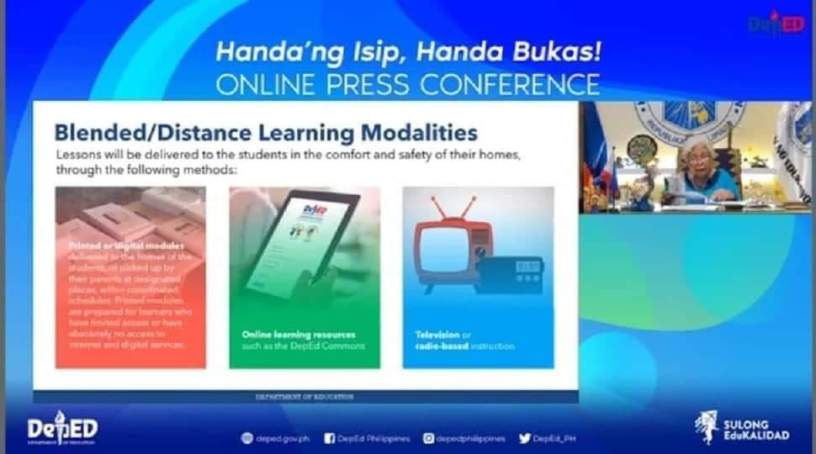
These are just a few of the many questions I was bothered about when the Department of Education (DepED) announced on August 14 the deferment of the school opening for the school year 2020-2021 from August 24 to October 5 in pursuant to Republic Act (RA) 11480 otherwise known as “An Act to Lengthen the School Calendar from Two Hundred (200) Days to Not More Than Two Hundred Twenty (220) Class Days”.
DepED Secretary Leonor Briones in a virtual press briefing recounted that the new plan was based on the magnitude of the preparations required since administrative offices like them are now manned with a skeleton workforce—which I assumed one of their potential downsides.
With 22.9 million students who already enrolled for the new academic year, I doubt if the nagging question is about our readiness to open classes or the effectiveness of all the learning modes and preparations we set. Instead, I believe the real talk should be: is it safe to start holding classes?
Safety is necessary because a lot of people do not think before they act. Some try to use mechanisms that they are not acquainted or trained to use thereby steering themselves to risk. In education, safety is crucial because it guarantees the overall development of the student and the teacher alike, as well as the environment surrounding them.
Recently, in an attempt to prepare for the learning modules that his students will take this school year, Norberto Rodillas, a teacher from Baguio City, revealed his identity after having tested positive for COVID-19 together with his parents and sister who was also a teacher and whom he got the virus from. His announcement rooted in the fear that he might have contracted with co-workers and that he wanted to save the lives of other people, according to ABS-CBN News. In effect, some villages in 28 barangays of the said city have been on strict lockdown.
Meanwhile, under Administrative Order No. 26, only government employees who physically report for work during the implementation of enhanced community quarantine (ECQ) can receive hazard pay. Moreover, DepED Undersecretary for Finance Anne Sevilla said COVID-19 medications and treatment funding for teachers like Rodillas were not present in the agency’s budget, however, they are covered by PhilHealth.
Let us take this as an example of why a realistic strategy is vital especially as we face the indefiniteness of this pandemic. The government knows the need for educational continuity but the safety of those who are under it should never be compromised. There might be no exact solutions yet but allowing people to go to an unsafe workplace and expecting them to do more with less is not okay. Many people are moving to test things like this that otherwise would not have if we stayed at home longer. The government must see the fallouts of operating with a diminished workforce and how these will affect the continuity of their plans.
Previously, fresh calls to postpone the opening of classes on August 24 posed mixed reactions from the general public as the government’s response to the pandemic sprouted tragedy of errors—not to mention the issue on data inconsistencies provided by the Department of Health (DOH) that prompted data scientists to call the agency’s attention, the “we-have-flattened-the-curve” claims of some government officials, the rising number of active COVID-19 cases depressed by the low number of recoveries, the disadvantaged minority’s tough ways of coping, and eventually the misplaced priorities like the shutting down of a media giant and the imposition of Anti-Terrorism Law.
To add, recent concerns on our education sector have been headlined and served in our past day breakfasts as technical glitches on learning modules caught the eye of grammar sticklers
While it is right to not disrupt the learning of the students as human capital continues to decline, now is the right time to innovate policies and change the system. If the meetings to schedule the opening of the school year takes place via online platforms for the immunity of participants, maybe we should not be discussing school opening at all. In the end, safety is a priority and priorities are a moral issue. Should we wait for our own moves to turn into moral negligence? Perhaps, certain things already proved it did.
The following column is contributed by Reychemver Credo.
SOURCES:
[1] https://rappler.com/nation/family-of-public-school-teachers-get-infected-with-coronavirus-baguio
 Paghimutad