

Report by Anna L. Golez
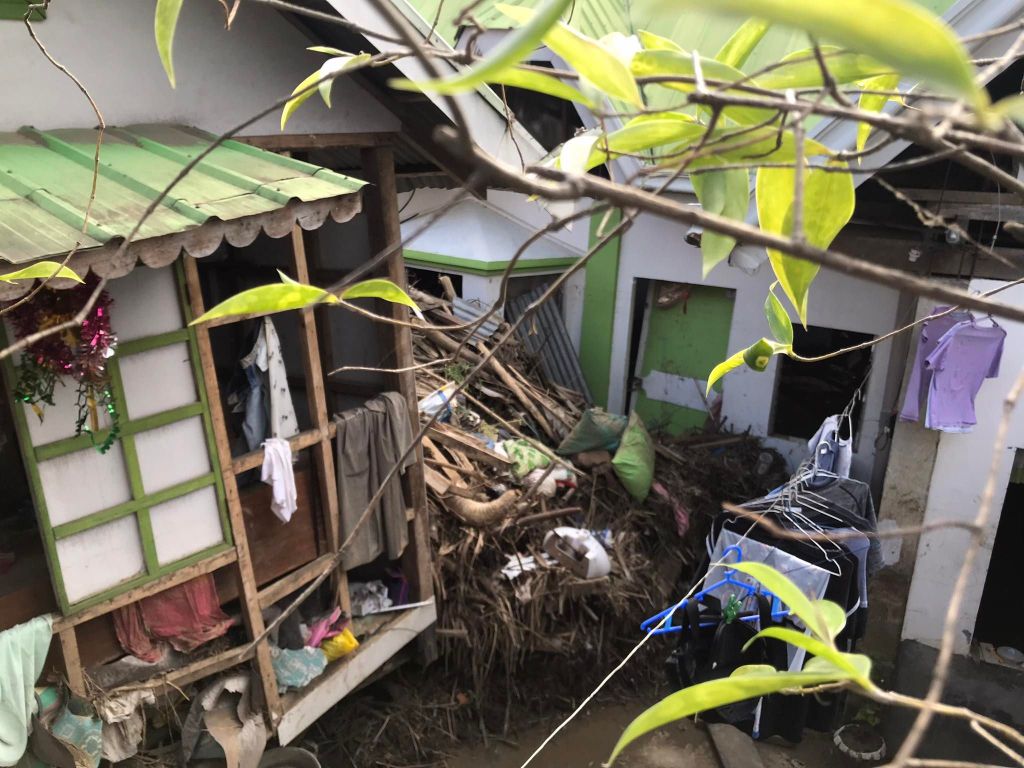
Over a month after Typhoon Odette, Negrosanons, particularly students, are still struggling from the damages brought on by the typhoon and the subsequent lack of aid.
Students resuming online classes have expressed their frustrations with teachers’ deadlines, school administrations’ responses, and overall inadequate compassion and consideration regarding the needs of students affected by the typhoon.
For Lester Janito, a fourth year BS Civil Engineering student at Negros Oriental State University (NORSU), proceeding with his studies was difficult after Typhoon Odette hit due to poor internet connection and loss of power. Living in Siaton, Negros Oriental, he was relying only on WiFi as there is no cell site in their area.
Jonna Mae Presquito, a Grade 12 Riverside College STEM student and resident of Moises Padilla felt unprepared to complete any school activities after the typhoon.
“I was still reeling from the experience of being without power, internet connection, or data,” she says.
Caren Montelibano, a fourth year BS Criminology student at NORSU, also cited the insufficient learning conditions even before the typhoon
“Some students don’t have a stable internet connection. Before the typhoon they didn’t have that, but after the typhoon it got worse. Most of them can’t attend classes,” she says.
Typhoon Odette’s damages coupled with the COVID-19 pandemic have put a strain on the mental health of students.
Janito says, “I’m not mentally well because just a few months ago, I had mild depression. It all started when the pandemic came. We’re all stuck at home. We cannot reach out to our friends. I I was struggling at that time.”
As president of NORSU main campus 2, he has prioritized mental health awareness. “We had two webinars on it because I think mental health matters especially to us students in the middle of this pandemic.”
To cope with deadlines and the stress of the typhoon, students have appealed to school administrations to consider extensions, waive final exams, or even implement an academic freeze or break.
Janito, who is president of NORSU Main Campus 2, shared that the student government of NORSU submitted a letter to the administration proposing an academic freeze in light of the typhoon.
However, the school administration did not approve it, reasoning they did not want to shift the academic calendar around.
Montelibano, who serves as governor of the student government of the College of Criminal Justice Education in NORSU Main Campus 2, explained that the students made another proposal. “We had another letter to extend the deadlines of final requirements, but not extend the school calendar and just waive final exams.”
Montelibano says the letter was approved by the university president, adding however, “Because there was no official memo from the university president page, the teachers did not follow it, but the letter was signed already. We published a scanned signed letter. The teachers said some of their courses cannot afford to waive the final exams. Until now, we are still waiting for that memo because we had been promised a memo would be released soon.”
Floyd Pinili, a third year BS Mechanical Engineering at NORSU and governor for College of Engineering and Architecture, says, “Even when we sent the letter, we couldn’t feel their sense of urgency. I also feel that they have a fixed budget, so they can’t give any subsidies. In my opinion, this shows that the admin does not prioritize student welfare.”
Pinili also noted that when connection was restored, their instructors contacted them regarding requirements.
“They reminded us of our school work that we needed to pass; some gave considerations. It was an additional worry to the students,” he says.
Despite the academic demands and pressure on their mental health, students still have managed to step in and assist with providing relief to their communities.
Janito shared that the NORSU student government started a donation drive, Tulong Norsunian
“We are giving relief goods to students from other campuses, from Bais, Manjuyod, Guihulngan. Student government started the initiative, but we coordinated with the administration so now it’s a collaboration [between] the administration and student government,” says Janito.
Negros Occidental, which declared a state of calamity last December 20, saw 181,110 people displaced by the super typhoon as reported by the Provincial Disaster Risk Reduction and Management Office (PDRRMO).
In Negros Oriental, the National Disaster Risk Reduction and Management Council placed the number of affected people in Negros Oriental at nearly 10,000 from 82 Barangays.
The aftermath of Typhoon Odette together with the dilemmas of the pandemic have resulted in poor learning conditions and the demands for adequate response from school administrations and national and local governments still persist.
Montelibano is appealing to the local government unit to assist in restoring power and internet connection. “Help people in the North with their electricity. NORECO is struggling to fix all those lines, and they lack manpower. Maybe they could assist with that.”
She also hopes the school administration will give students a break, saying, “We did not have a Christmas break, we didn’t have a semestral break; we have not had any break. I hope they would give us time, especially students affected, I hope they would give a little bit of time so students can focus on themselves and their mental health.”
Pinili requests the Commission on Higher Education (CHED) to allow students to end the semester and to base grades on previous performance.
“If we push for the submission of requirements, it would be more on compliance anyway instead of learning and that is not the essence of going to school or attending classes,” he says.
Presquito also supports the #EndTheSem campaign, explaining, “We need it this time of disaster we had. All of the worry we are now feeling is detrimental to our health system, and we must take action. Because not every student is capable of completing their work or assignment owing to a lack of energy or internet access.”
Montelibano adds, “Many students cannot go to class because they lost their gadgets. We haven’t heard from some of our classmates after the typhoon but we know they are okay, but they cannot attend classes…I know a lot of students especially in the North that don’t have electricity yet. They can’t afford to focus on academics because many of them still don’t have stable electricity or internet. Students shouldn’t be forced to choose between education and immediate survival.”
Kabataan Party-list Negros, alongside other rogressive youth groups, lay their demands through the Negrosanon Youth Demands. The demands include putting an end to the semester, providing inclusive and adequate support for students, faculty and staff, and stopping the collection of school fees and impending tuition.
Student councils, campus publications and other interested student and youth organizations and individuals can read the full statement and sign the demands in support at this link tinyurl.com/NegrosYouthDemands

