
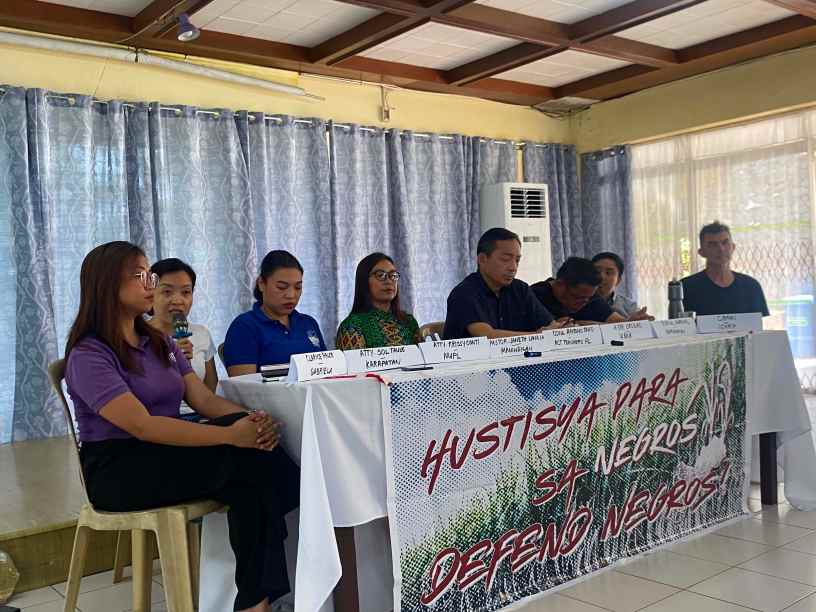
BACOLOD CITY, Philippines — A national fact-finding mission said Friday that witness accounts showed several civilians were killed and farming communities were subjected to continuing rights violations after an April 19 military operation in Toboso, Negros Occidental, that left 19 people dead.
The National Fact-Finding and Solidarity Mission, held on May 14th and attended by hundreds of delegates, including rights workers, lawmakers, journalists and youth leaders, said residents identified community journalist RJ Nichole Ledesma, student leader Alyssa Alano, peasant advocates Errol Wendel and Maureen Santuyo, as well as Filipino-American human rights advocates Lyle Prijoles and Kai Sorem as unarmed civilians who were conducting interviews with families affected by land disputes in Barangay Salamanca.
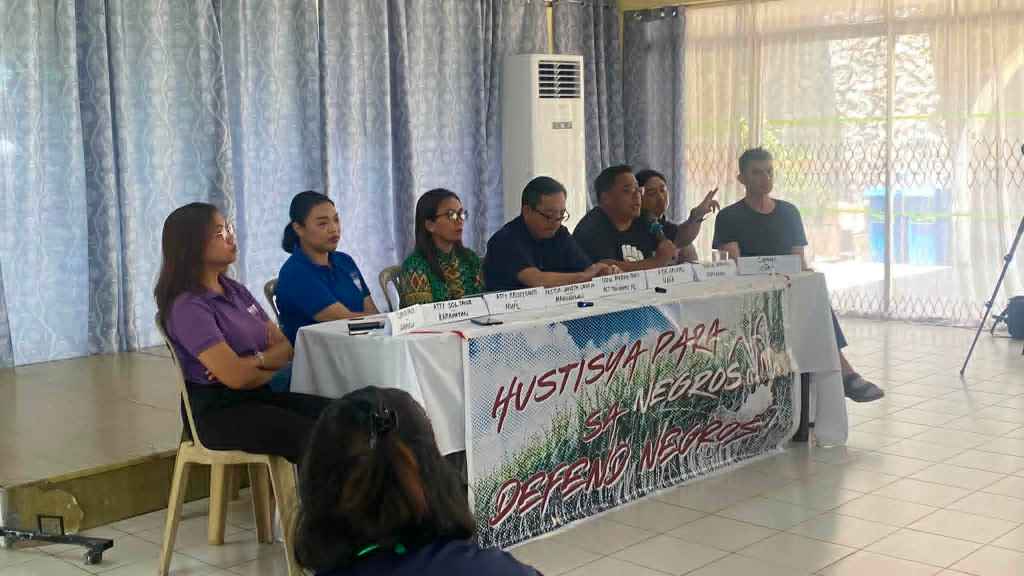
UMA National Chairperson Ariel Casilao said some of those killed were researching an agrarian dispute at Hacienda Bedonia when the military operation took place.
“Negros has been the massacre capital of human rights and international humanitarian law violations,” Casilao declared. “I don’t want to say it, but this is what the data shows: remember the Sagay 9 massacre, remember the Fausto massacre, remember the massacres that have happened in the entire island of Negros.”
The mission’s findings challenged the government’s account of the April 19 operation. Philippine officials earlier said troops clashed with suspected New People’s Army guerrillas in Toboso, killing 19 people and recovering 24 firearms. More than a hundred human rights, sectoral, and civil groups in Negros and across the country have condemned the operation and called for an independent investigation.
Residents told the mission that military presence in Sitio Sinugmawan had intensified since 2025 and that troops were seen in the area on April 18, along with large drones. Witnesses said gunfire began between 3 a.m. and 4 a.m. on April 19 in Sitio Sinugmawan, while residents of Sitio Plarinding said they heard shots from 9 a.m. to 11 a.m.
The mission said soldiers entered and searched at least 18 civilian homes. It also said three residents in Sitio Plarinding reported being detained, interrogated and brought to a vantage point, where they saw soldiers firing indiscriminately from the hills toward civilian areas, farmlands and a fishpond.
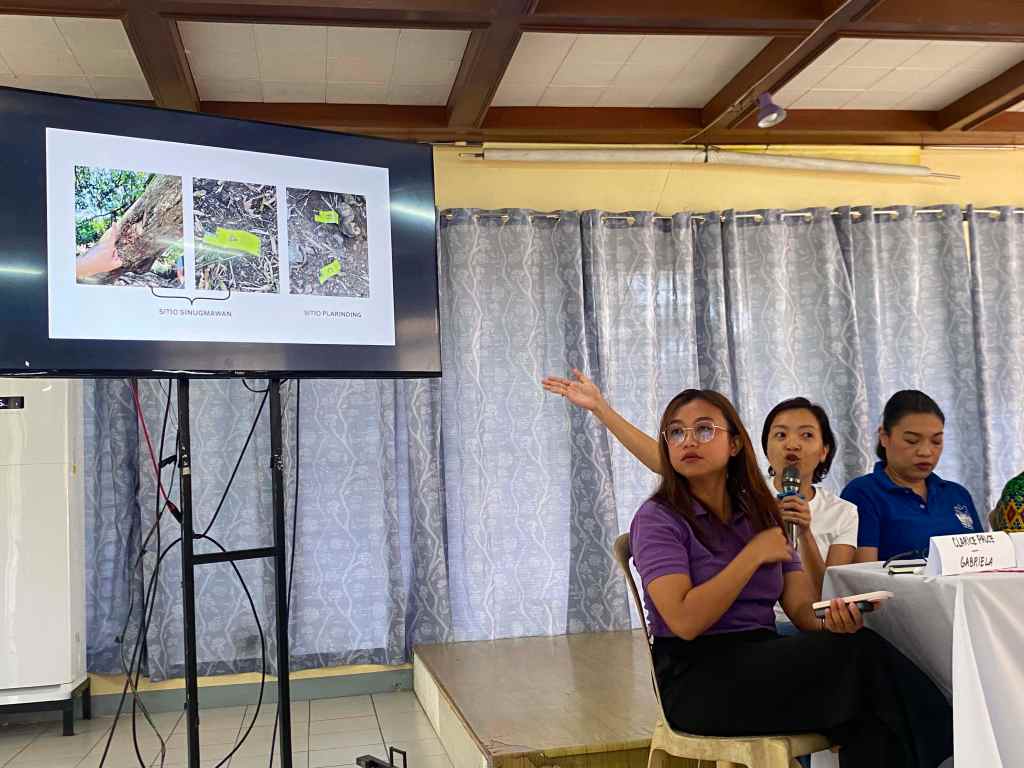
Photo Source: Bianca Montilla
“[The residents] reported as well that in the days prior to the April 19th operation, they said that drones from the military were already flying in their neighborhoods,” Atty. Maria Sol Taule of human rights organization Karapatan shared.
Residents said they were displaced from April 19 to 22, cutting them off from their homes and livelihoods for three days.
The mission also raised concerns over the handling of the dead, saying the bodies of the 19 were brought out only on April 21. Karapatan pointed out that forensic pathologist Dr. Raquel Fortun revealed that certain bodies had multiple gunshot wounds at the back, but the photos spread by the Philippine military showed that the bodies of the deceased were facing up. Fortun previously said initial autopsies raised concerns about the recovery and identification of remains, including the misidentification of one body as Wendel’s.
“It can be seen that the photos of the victims being spread by the Philippine military (at the supposed encounter site) look staged,” Taule added. “For example, in the case of RJ, there was an ammo pouch that looked like it was just placed haphazardly on him.”
The findings come as local officials have defended the military. Negros Occidental Gov. Eugenio Jose Lacson said he believed the Toboso operation was legitimate and that he did not support additional investigations beyond the Commission on Human Rights probe. Meanwhile, Rep. Javi Benitez of the 3rd district of Negros Occidental also withdrew his congressional inquiry. Additionally, the Negros Association of Chief Executives backed the Armed Forces of the Philippines’ “role in maintaining peace and security.”
Prior to the mission proceeding to Toboso, the delegation also attempted to meet Gov. Lacson at the Provincial Capitol building but were instead met by a legal aid on his behalf.
The mission said delegates were also followed and photographed during the investigation, calling it surveillance and harassment meant to obstruct documentation efforts.
The group called for accountability from the AFP’s 79th Infantry Battalion and 303rd Infantry Brigade, an end to militarization in Negros and justice for the Negros 19.

