
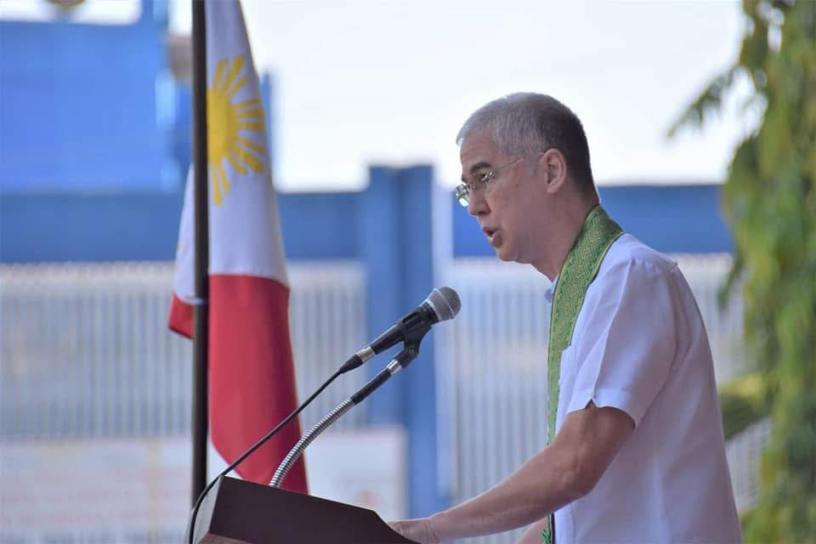
BACOLOD CITY, Philippines — Youth groups and leaders condemned Negros Occidental Gov. Eugenio Jose “Bong” Lacson’s call for schools to monitor campus activities following the deaths of student activists in recent military operations on Negros Island, warning that the proposal could lead to surveillance, profiling and red-tagging inside academic institutions.
“The schools should be vigilant on (the students’) activities inside the campus,” Lacson said in a statement to the media.
Lacson made the remarks shortly after Vince Francis Dingding, a former University of the Philippines Cebu student leader, was among five New People’s Army rebels killed in a May 16th encounter with Philippine Army troops in Cauayan, Negros Occidental.
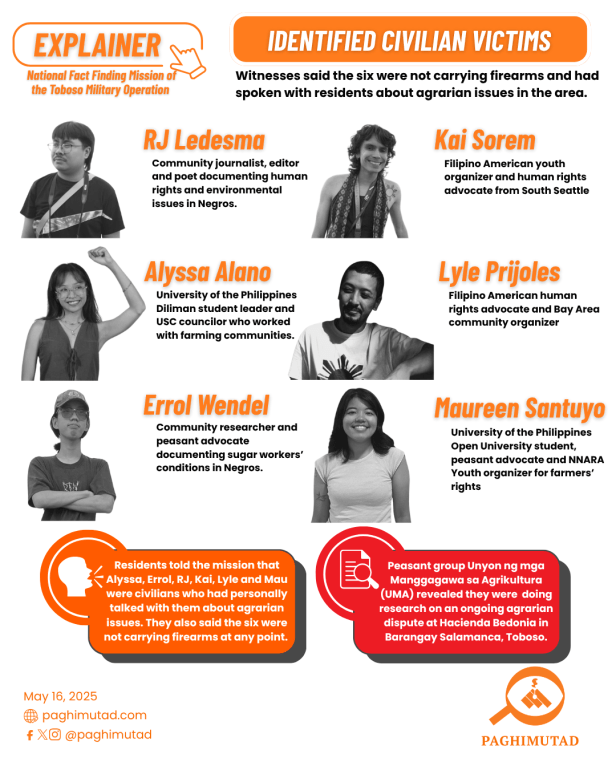
The incident came less than a month after the April 19th Toboso incident, where 19 people were killed, including student activists and alumni Alyssa Alano of UP Diliman, Maureen Keil Santuyo of UP Open University, and University of St. La Salle alumnus RJ Ledesma.
Florence Guzon, Kabataan Partylist Vice President for the Visayas, said Lacson’s statement appeared to encourage academic institutions “to perform intelligence work on our students.”
“What the governor wishes to do only stands to stifle academic freedom, critical thinking, and the holistic development of the youth,” Guzon said, calling the proposal “subtle red-tagging” that could endanger students involved in campus and community campaigns.
Althea Geaga, chairperson of the College Editors Guild of the Philippines-Negros Island Region, said Lacson may be attempting to address violence in Negros, but urged his office to recognize the deeper social problems behind the unrest.
“Monitoring the students of their activities is passively red-tagging them, a narrative imposed upon by the NTF-ELCAC,” Geaga said, adding that such monitoring goes against students’ freedom to organize and “barricades academic freedom.”
Angela Grace Diamartin, national chairperson of the Student Council Alliance of the Philippines, said schools must remain spaces for critical thinking, not “state-sponsored surveillance, profiling, and intimidation.”
“Let us be clear: the crisis in our education system does not stem from the free exchange of ideas or student activism,” Diamartin remarked, saying that the problem in the education system lies in underfunded schools, tuition increases, underpaid teachers and government neglect.
Environmental youth leader Joshua Villalobos said the governor’s remarks could shrink civic space and worsen youth apathy.
“What the governor should encourage is not to surveil student activities but to widen, broaden, and make meaningful the governance spaces where young people can engage,” Villalobos said.

The criticism comes amid years of complaints from rights groups, student organizations and media advocates that Executive Order No. 70 or “Whole of Nation Approach”, which created the NTF-ELCAC or “National Task Force to End Local Communist Armed Conflict”, has been used to link critics of the government and activism to the communist insurgency.
While the policy says it aims to address the roots of armed conflict by mobilizing government agencies from the national to the barangay level, rights groups have said it has instead expanded the reach of counterinsurgency into schools, communities and civilian institutions–worsening red-tagging against activists, students, journalists and organizers. The Supreme Court has ruled that red-tagging, vilification, and guilt by association may threaten a person’s rights to life, liberty and security.
“The Whole of Nation Approach essentially puts the civilian agencies under military, and makes them defend what the military does even though they are wrong,” Felipe Gelle of Human Rights Advocates Negros Island said.

