
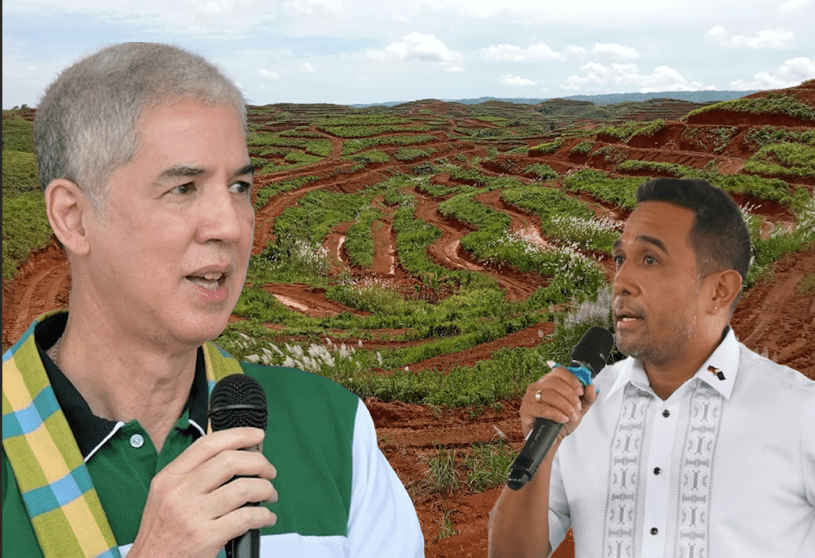
Negros Occidental Governor Eugenio Jose Lacson and Candoni Mayor Ray Ruiz have both ordered Hacienda Asia Plantations, Inc. (HAPI) to suspend all operations in Candoni over “consistent and escalating” environmental violations tied to its controversial palm oil plantation.
Mayor Ruiz’s order marks a sharp reversal from his earlier position. Just last year, he publicly praised the project as a “shining gift from the sky” and touted its potential to boost the town’s economy.
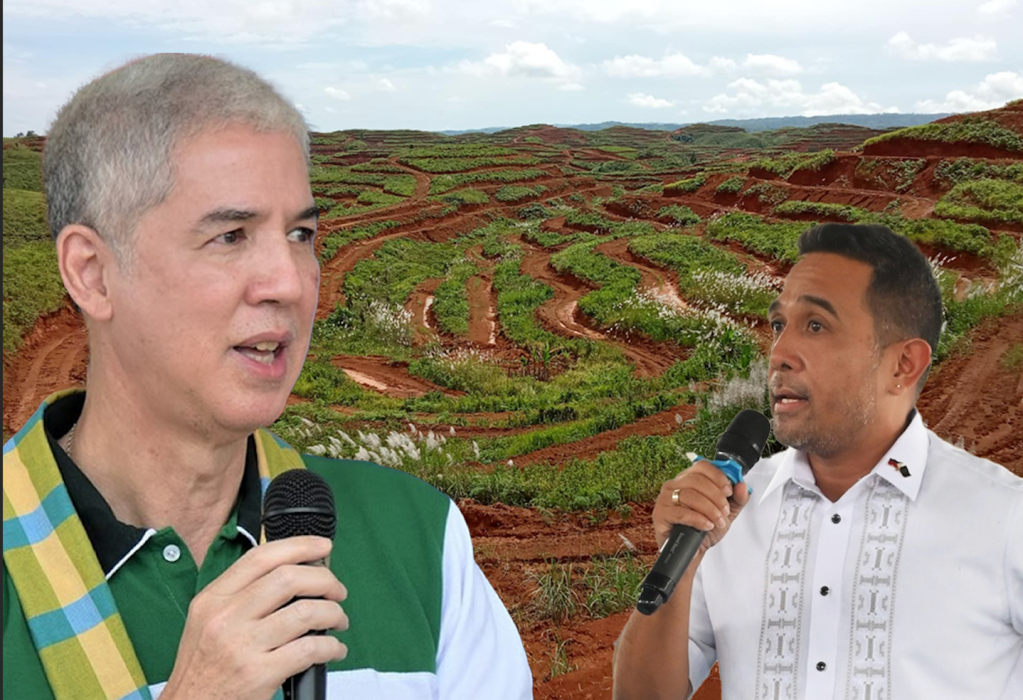
Negros Occidental Governor Eugenio Jose “Bong” Lacson has formally requested a Cease and Desist Order (CDO) against HAPI Inc for “continued and unlawful operations” in a controversial palm oil plantation project in Candoni town, citing serious environmental and regulatory violations.
In a letter dated June 12, 2025, addressed to the Department of Environment and Natural Resources (DENR) Region VI, Lacson called for immediate enforcement action, saying HAPI’s activities “proceeded despite lacking an Environmental Compliance Certificate (ECC)” and in defiance of earlier directives by the Multi-Partite Monitoring Team (MMT).
“Despite this clear directive, HAPI has proceeded with its plantation establishment activities using heavy equipment such as bulldozers and backhoes,” Lacson wrote, referencing circulating videos that document continued earth-moving operations and environmental damage.
Lacson’s move follows earlier communication with DENR Secretary Raphael Lotilla and a June 5 letter warning HAPI over its non-compliance. The governor also echoed findings from civil society and Indigenous groups, noting violations under the firm’s Integrated Forest Management Agreement (IFMA), including the clearing of riparian zones, erosion, and illegal conversion of forest land.
On the same day, Candoni Mayor Ray R. Ruiz issued a separate but aligned formal notice ordering HAPI to “immediately halt all earth-moving and related activities” and comply with MMT recommendations, which include securing an ECC and submitting complete environmental documentation.
Ruiz’s letter accused HAPI of betraying the local government’s good faith, stating, “Your operations have become a divisive force within our municipality, causing tensions among our people.”
This strong rebuke marks a sharp reversal for Ruiz, who had previously championed the PhP2-billion joint venture between HAPI and billionaire Isidro Consunji’s Sirawai Plywood and Lumber Corporation. In August 2024, Ruiz described the plantation as “a shining gift from the sky” and touted it as a driver of economic transformation that could elevate Candoni from a fourth-class to a first-class municipality.
“You have betrayed the confidence that was once extended in good faith,” Ruiz now wrote, highlighting the “destruction and burial of native flora” and the dumping of soil on public roads, which have drawn public backlash and gone viral on social media.
HAPI announced a temporary suspension of its earth-moving operations after a June 11 multisectoral dialogue with DENR, PEMO, and civil society organizations. However, local farmer and Indigenous groups say the suspension is insufficient and possibly insincere.
“This temporary pause is due to people’s pressure. But we cannot be complacent,” said SAVE TABLAS, a grassroots group of farmers and Indigenous Peoples, in a statement. “Even if the plantation is declared legal and complete with documents, it still endangers our land, water, food, and lives.”
The group, along with civil society coalition NICE, is demanding not just regulatory compliance but a total pull-out of HAPI, the revocation of its IFMA, reparations for affected communities, and a moratorium on all new palm oil projects in the region. A petition launched by NICE has gathered over 360 signatures.
As of this writing, DENR and EMB Region VI have yet to issue a public response to Governor Lacson’s call for a cease and desist order.
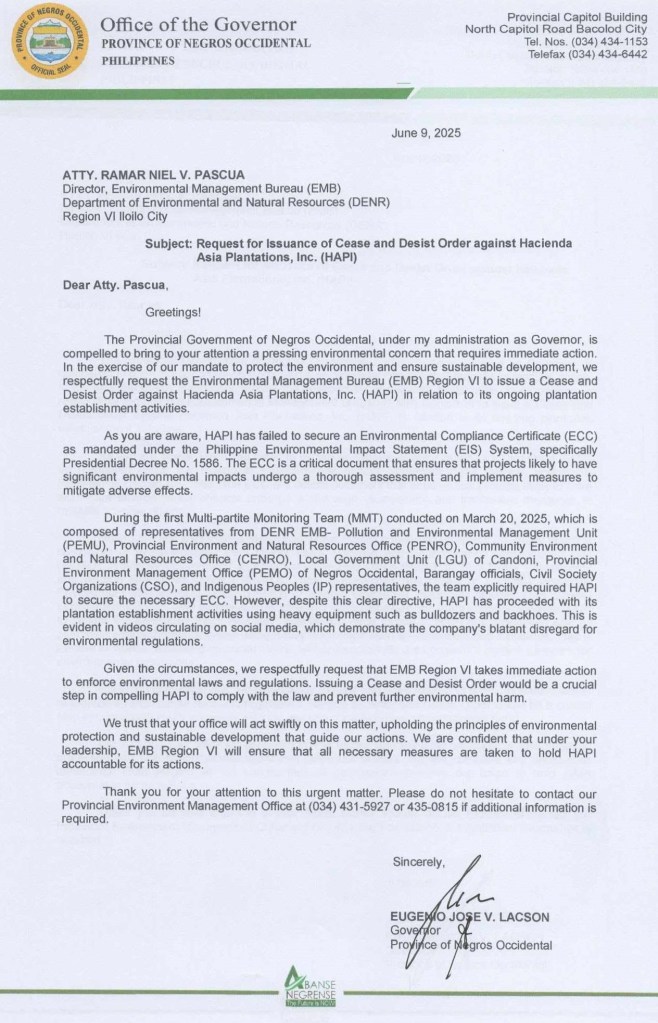
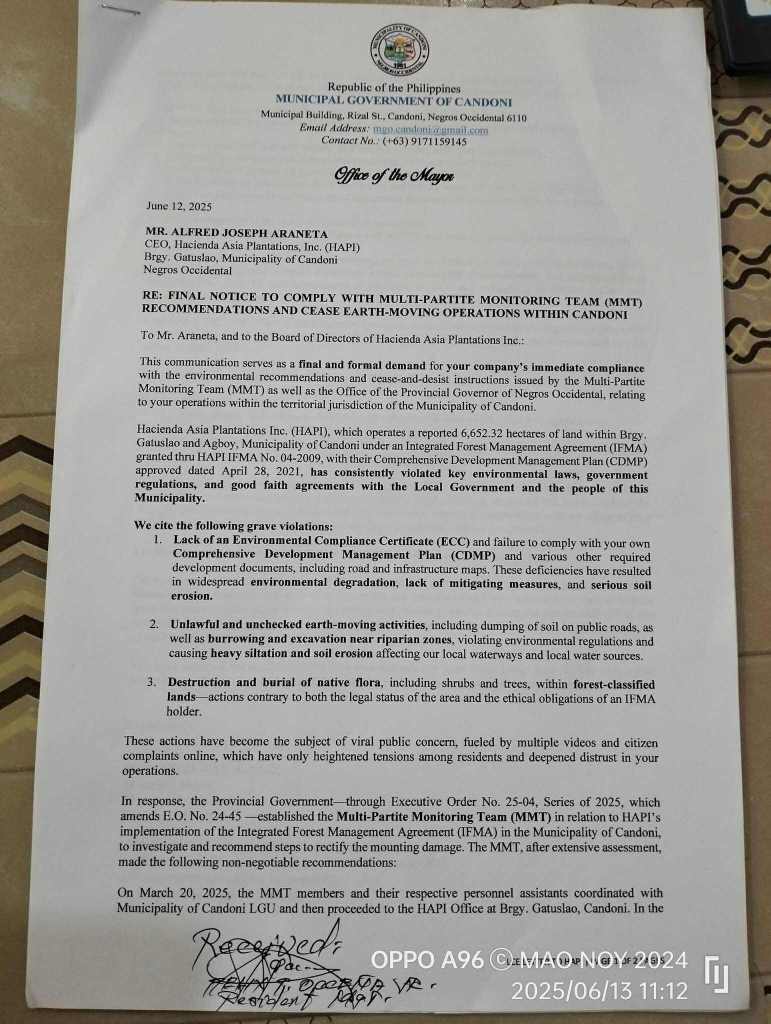
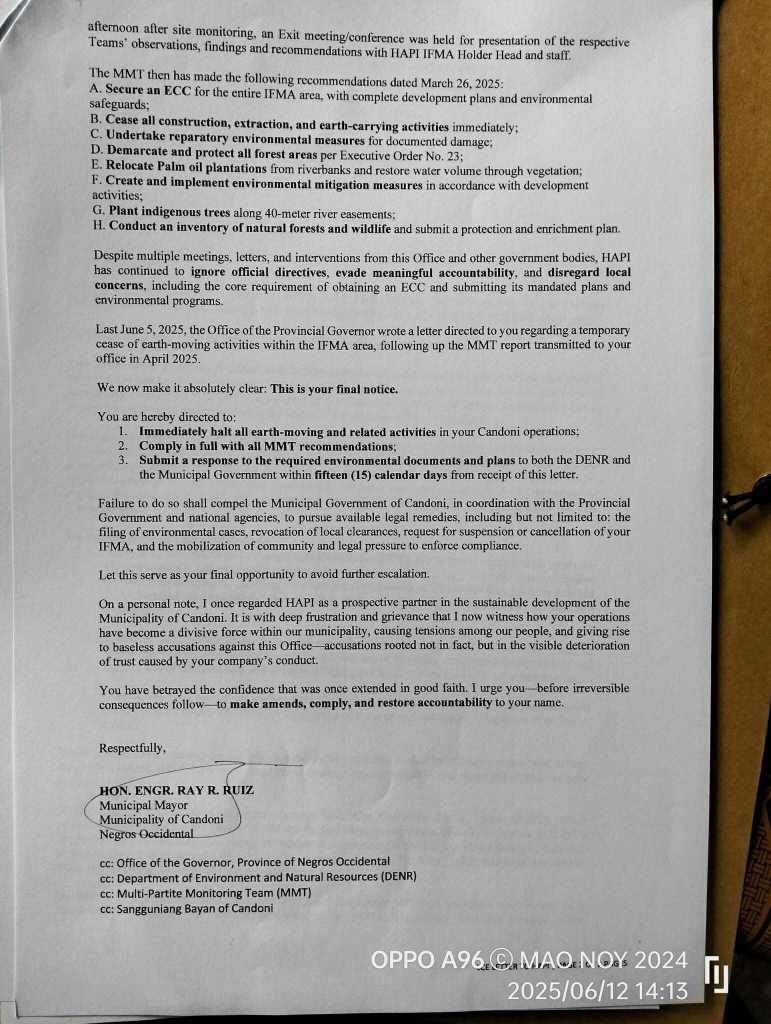
Letters of Guv Lacson and Mayor Ruiz to EMB Region VI and HAPI Inc, respectively.

