

Story by RJ Ledesma / Photos by Gen Feliciano, RJ Ledesma
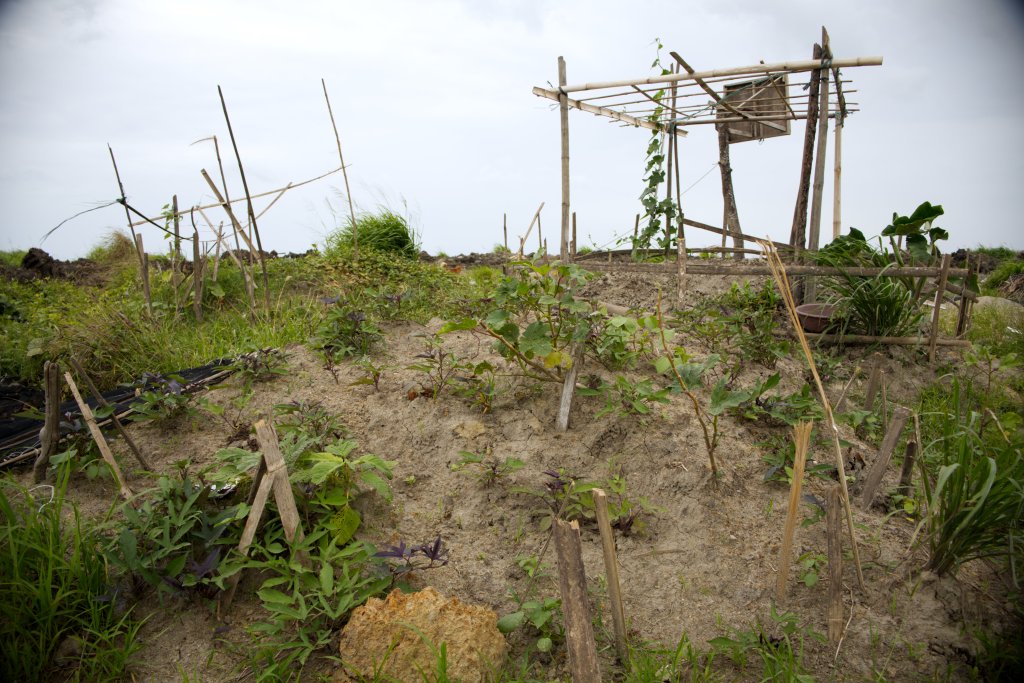
On a stretch of filled shoreline in Purok Bayanihan, Barangay Banago, small patches of kamote, kangkong, and other food crops now grow between piles of sand and rubble.
Residents planted the crops on the reclaimed ground as a quiet act of resistance. The land, they say, should belong to the community, not to developers pushing projects into the sea.
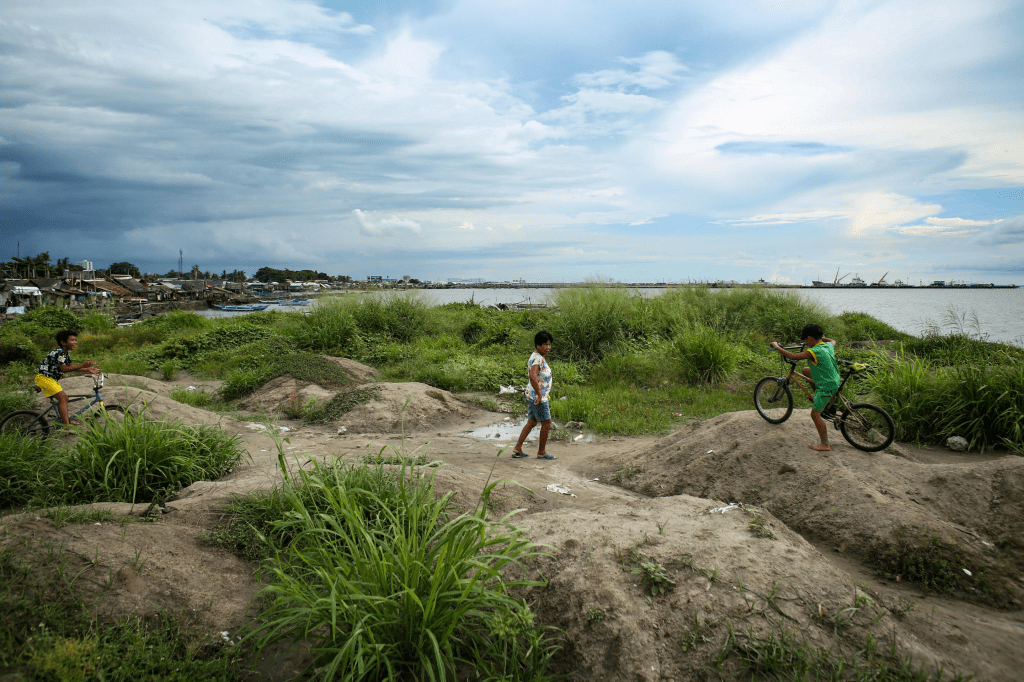
“When we have nothing to put on the table, this is where we get food,” said Jesus Rodriguez, president of the Bacolod Anti-Reclamation Movement (BARM), pointing to their garden.
Barangay Banago is home to around 2,000 fisherfolk. About 80 percent of its 20-thousand population live below the poverty line.
Fisherfolk say the return of heavy equipment to the coast last February reignited fears that reclamation activities in the barangay will resume despite unresolved questions over permits.
The controversy recently reached the city council last February 20, where a joint hearing by the committees on Human Rights, Environment, and Laws scrutinized the activities of Home Invest Realty Ventures Inc., linked to former councilor Vladimir Gonzales.
Representatives of the company maintained that the project involves the “recovery” of a seven-hectare titled property allegedly submerged by coastal erosion.
“We do not have an Environmental Compliance Certificate because we secured a Certificate of Non-Coverage for the titled lots,” a company representative admitted during the hearing, citing a “Restoration Clearance” issued by the Philippine Reclamation Authority.
Leaders of the BARM, an alliance of fisherfolk, urban poor residents, and other anti-reclamation advocates, challenged the claim.
They pointed to minutes of a February 22, 2024 technical meeting at the Provincial Environment Management Office in Negros Occidental, where representatives of the Department of Environment and Natural Resources disputed the developer’s position.
Atty. Elizur Militar of DENR Region 6 told the meeting that under the Civil Code, titled property permanently engulfed by the sea becomes part of the public domain. Any filling or construction in such an area, he said, is considered reclamation regardless of how it is described.
The Environmental Management Bureau later concluded that the project constitutes reclamation and therefore requires an Environmental Compliance Certificate under Presidential Decree 1586.
During the hearing, the city council ordered the developer to submit all required permits within ten days, including an Environmental Compliance Certificate. The council also asked the City Legal Office to verify whether a 2022 Cease and Desist Order was legally lifted in November 2023, as claimed by the developer.
Vincent Fernandez of Pamalakaya Negros said the developer failed to comply within the deadline.
“When we updated Councilor Jun Gamboa after the deadline passed, he said the reclamation carried out in Barangay Banago was illegal,” Fernandez said.
According to Fernandez, the councilor cited several deficiencies in the project’s documentation.
“First, they no longer have a Resolution of No Objection. Second, they do not have an Environmental Compliance Certificate. Third, they do not have complete permits from the Philippine Reclamation Authority,” he said.
Fernandez added that the developer’s application described the activity as “backfill” or in local terms, “pika-pika.”
“But what happened was not minor filling,” he said. “More than 3.5 hectares of coastal waters in Barangay Banago were reclaimed.”
Following the public hearing, residents observed that the developer removed its equipment from the site. “They pulled out their backhoes, tractors, and bulldozers,” Fernandez said.
“Until now those machines have not returned, which means operations have stopped for now.”
Despite the pause, fisherfolk remain wary — and say the damage has already been done.
For Ricky Siray, who has fished along the Banago shoreline for two decades, the filling of coastal waters has already taken a heavy toll.
“We are struggling now because we no longer have fishing grounds.” He said fish catches have steadily declined since the reclamation began.
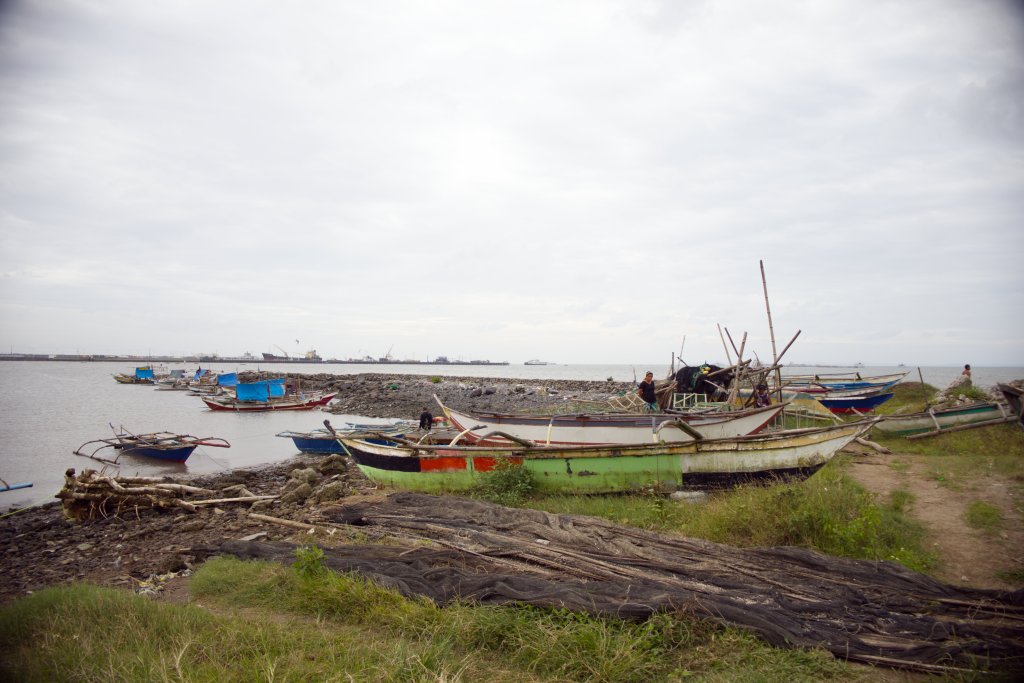
Siray added that fisherfolk also lost areas where they used to park their boats. They claim that the developers put mounds atop the reclaimed area, like little hills, to discourage the fisherfolk to dock their vessels.
He said the shoreline also serves as a refuge where fisherfolk secure their boats during storms. “When there is a typhoon, this is where we pull our boats up for safety,” he said.
“If this continues, where are we supposed to go?” he asked.
Mariafe Almario, a resident who gathers shellfish along the shore, said their traditional gleaning grounds are disappearing.
“Our livelihood is slowly disappearing,” Almario said. “It is becoming harder to fish because the species we used to catch — panginhason, punaw, and other fish — are disappearing.”
“Last month Vladimir Gonzales came here and said the boats parked along the shore would be removed,” Jesus Rodriguez said. “He demolished the area using a backhoe because it would serve as the access road for reclamation equipment.”
Rodriguez said his own livelihood was destroyed after the works began. “My first boat — the yellow one — was parked here. They did not even inform me that it would be removed,” he told Paghimutad.
“The backhoe and heavy equipment grabbed it and cut it apart.” What remained of the damaged boat, he said, was hauled away in a cargo van.
“Now I work as a cargo porter at BREDCO Port just to earn money to buy rice,” Rodriguez said.
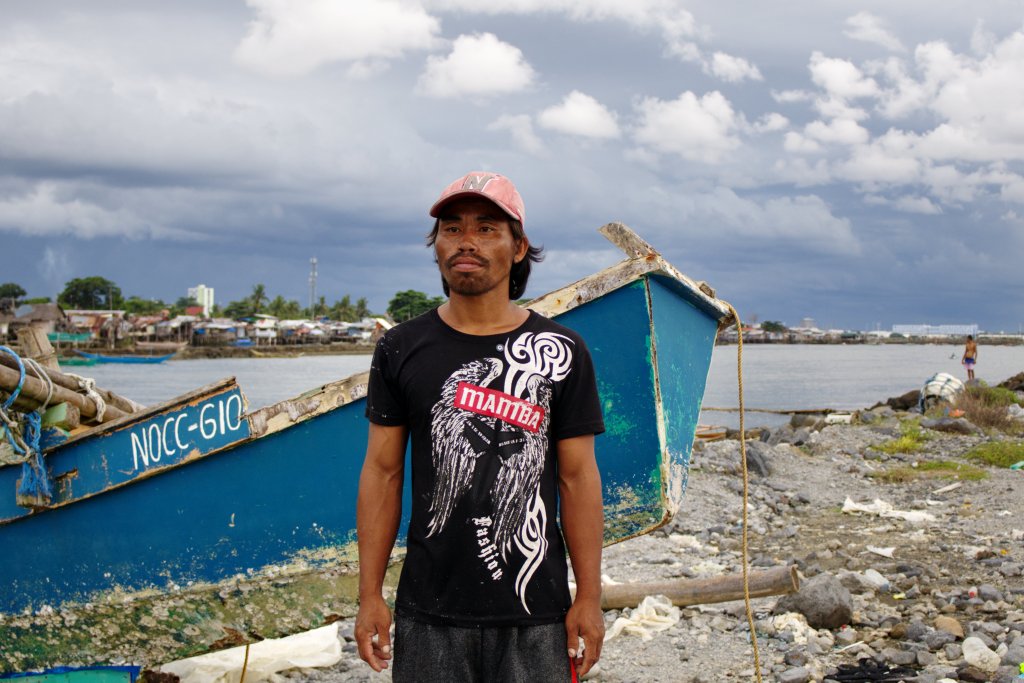
Rodriguez also alleged that altered drainage pathways linked to the project have worsened flooding in the barangay.
“They blame it on our trash,” he said. “But the real cause is the project itself. The waterways where water used to flow are getting narrower.”
Pamalakaya is now urging the local government to pursue legal action against the developer and restore the filled coastal area to public use.
“We are calling on the government to return the filled land to the public,” Fernandez said. “And to stop reclamation projects because they are harmful to fisherfolk.”
For Siray and other residents of Purok Bayanihan, the stakes are simple. “We belong right here along the shore,” he said.
“If this place is buried under reclamation, kung hindi kami lalaban, what will happen to us?” And so they continue to resist.

