
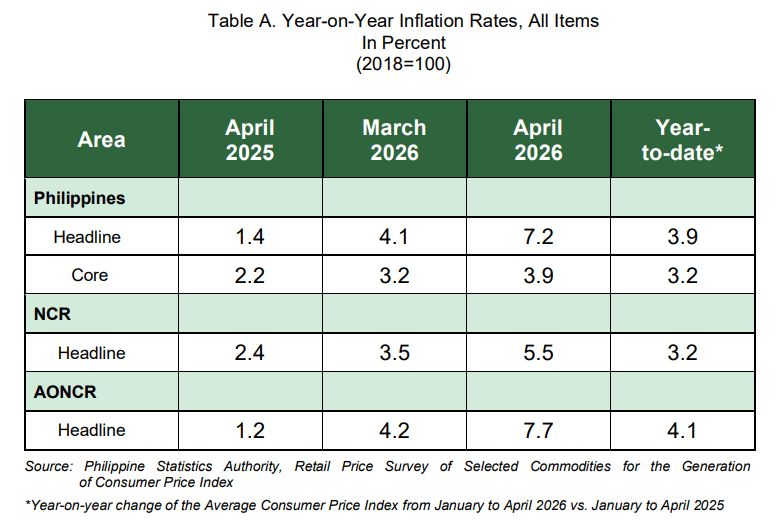
BACOLOD CITY, Philippines — Negros Island posted the country’s lowest inflation rate in April, but civil society advocates and researchers warned that even slower price increases are hitting a region marked by deep poverty, low farm wages, and stark land inequality.
The Philippine Statistics Authority said inflation in the Negros Island Region reached 4.9%, the lowest among all regions, as nationwide headline inflation surged to 7.2% from 4.1% in March and 1.4% a year earlier.
The PSA said the national increase was driven largely by food, transport, and housing costs. Food inflation accelerated to 6.1%, with rice prices rising 13.7%, corn jumping 21%, fish and seafood climbing 9.4%, and vegetables increasing 10.4%. Transport inflation surged to 21.4%, while housing, water, electricity, gas, and other fuels rose 8.2%.
Central Visayas remained the country’s inflation hotspot for the ninth straight month at 10.8%, followed by Zamboanga Peninsula at 9.9%, Davao Region at 9.7%, SOCCSKSARGEN at 9.6%, and Caraga at 9.4%. The PSA said all regions outside Metro Manila recorded higher inflation in April than in March.
However, progressive groups and researchers say that Negros’ relatively lower inflation rate does not reflect the scale of hardship in the sugar-producing island. They say that families in the region continue to face higher food, fuel, and transport costs amid a nationwide surge in consumer prices, especially as wages remain stagnant.
Rosario Guzman of the IBON Foundation noted that low inflation does not mean lower prices, but merely a slower rate of price increase. “People in Negros are not having an easier time,” Guzman said. “They are suffering from the same price increases in basic commodities that have been precipitated by the oil shock.”
Guzman also noted that the dampened inflation could be due to less reliance on commercial activities such as subsistence farming and informal exchange.
“Low consumer demand could be a cause for lower inflation,” Negros-based human rights worker Felipe Gelle added, noting that low farmgate sugar prices means that people in the region, a great number of whom are employed by the sugar industry, are spending less due to meager salary.
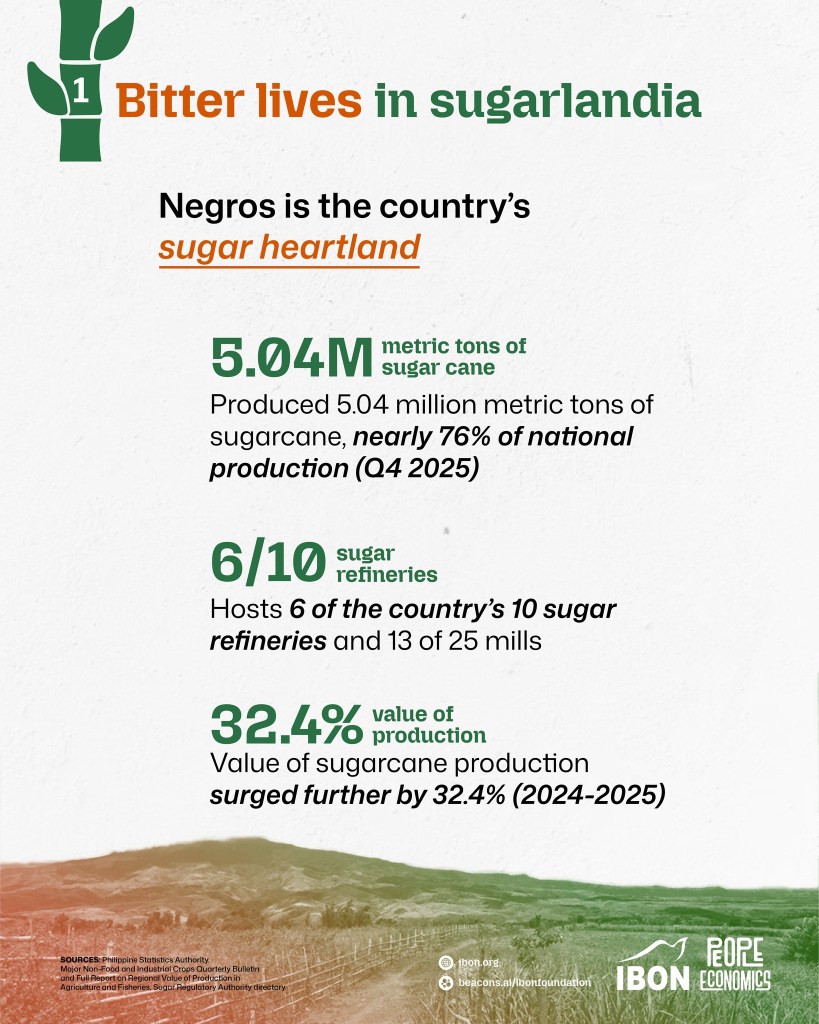
IBON Foundation reported that Negros is the country’s foremost grower of sugar, producing 5.04 million metric tons of sugarcane, or nearly 76% of national production, in the fourth quarter of 2025.
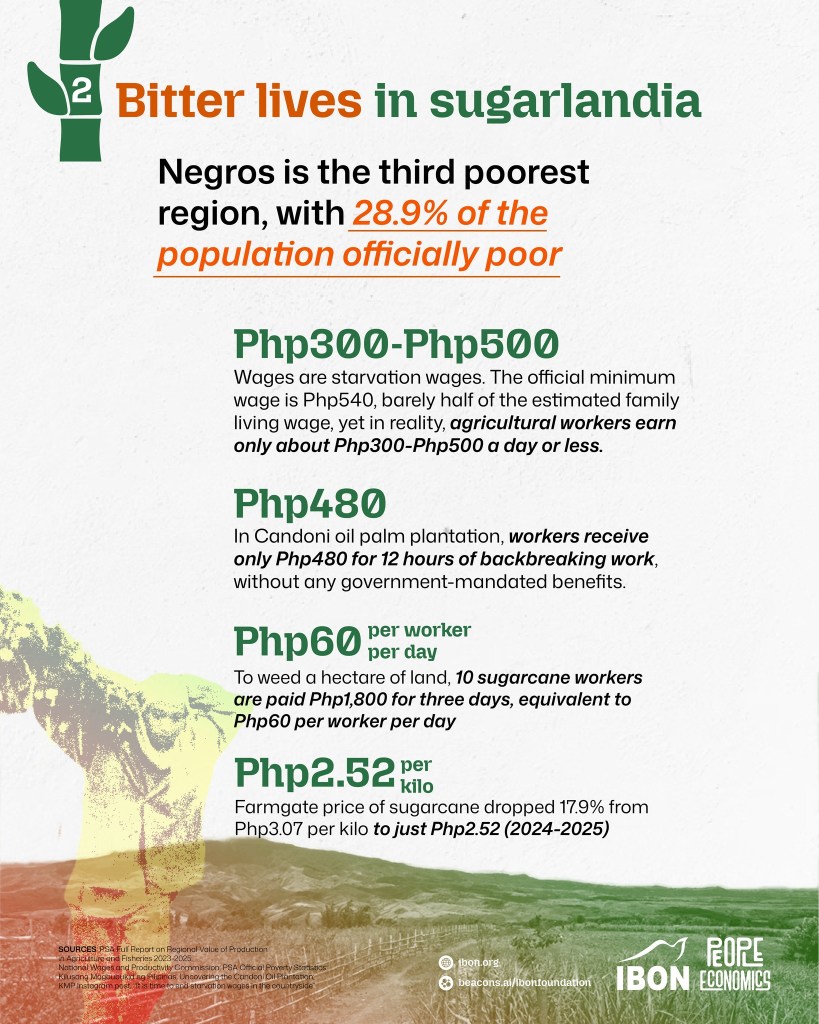
However, it also said that Negros is the third poorest region, with 28.9% of its population officially poor. It stated that many agricultural workers earn only 300 to 500 pesos a day or less, below the 540-peso minimum wage and far from the estimated family living wage.
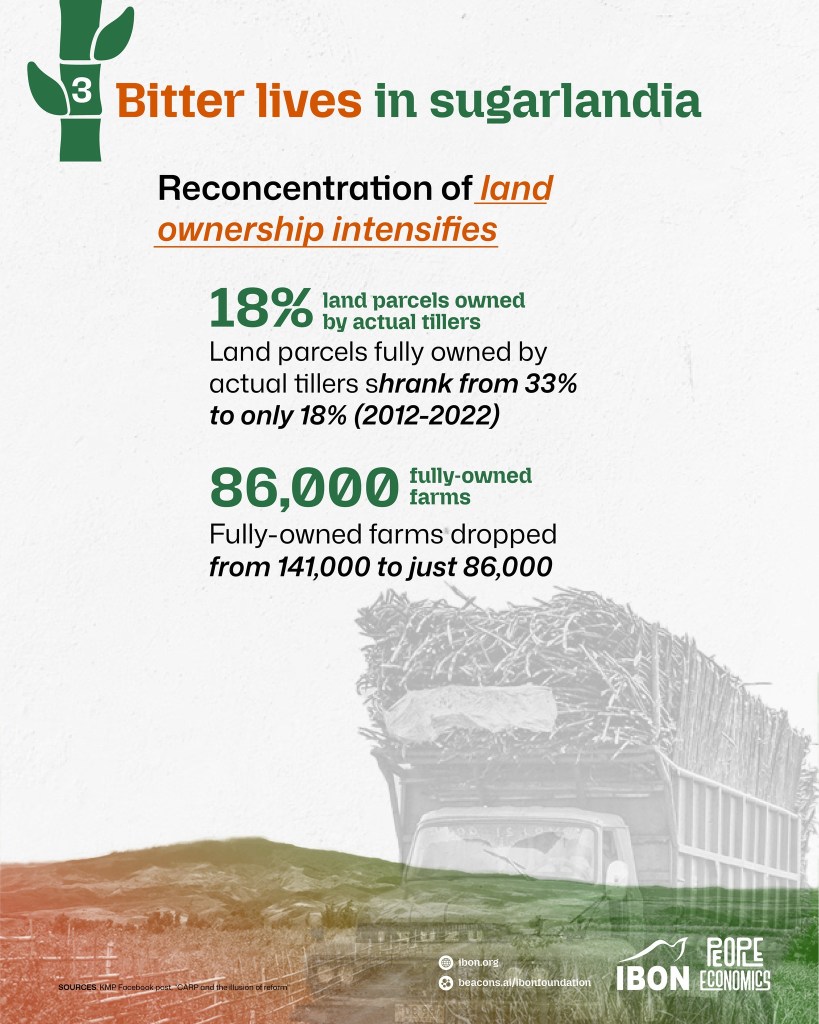
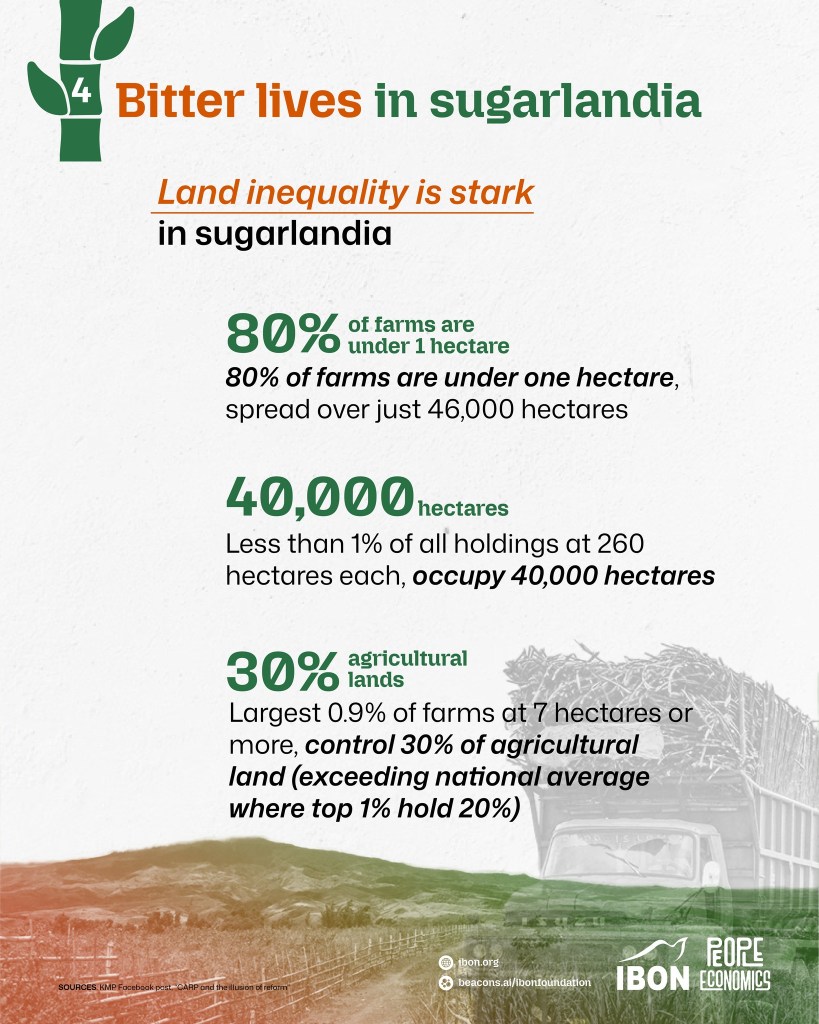
IBON also cited worsening land inequality, saying land parcels fully owned by actual tillers fell from 33% to 18% from 2012 to 2022, while fully owned farms dropped from 141,000 to 86,000. It said 80% of farms are under one hectare, while the largest 0.9% of farms control 30% of agricultural land.
The research institute said the government should cut oil taxes, regulate fuel prices, strengthen food production, and pursue long-term reforms to protect poor and landless families from recurring price shocks.
 Paghimutad