

BACOLOD, Philippines — A sugar workers’ group warned that falling millgate prices are worsening poverty among farm workers in Negros, as small planters and agrarian reform beneficiaries struggle to recover production costs amid unchecked sugar importation.
Mario Tapi-on of the National Federation of Sugar Workers (NFSW) said sugar prices fell to about PHP2,000 to PHP2,100 per bag in January, below the estimated PHP2,500 per bag production cost. He said losses suffered by small planters and agrarian reform beneficiaries are passed on to field workers, many of whom earn only PHP200 to PHP300 a day as contractual laborers.
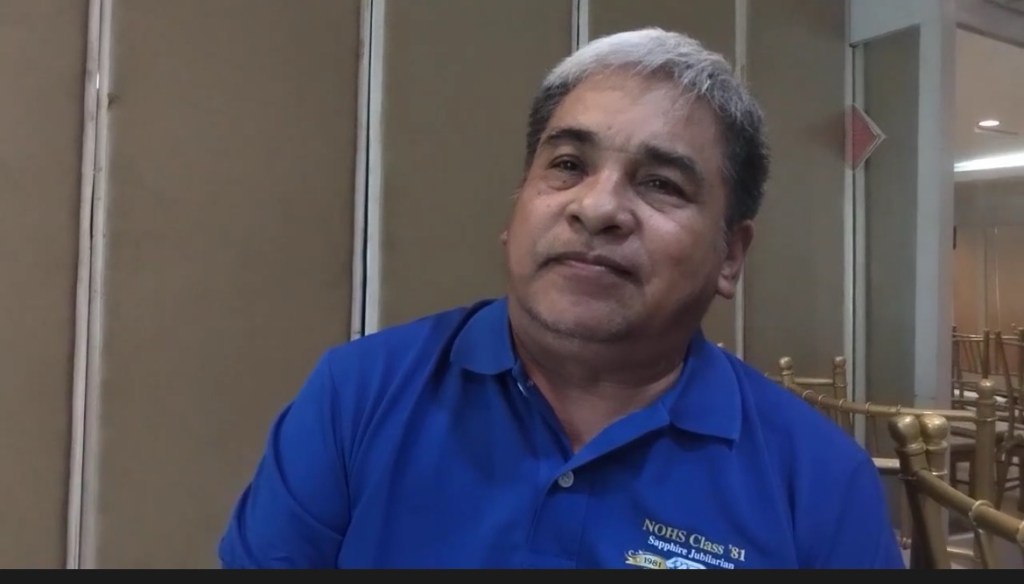
“This income is not enough to meet the needs of a family of five,” Tapi-on said, adding that many contractual workers have no health insurance, social security or retirement benefits.
The warning comes as Negros Island and the wider Philippine sugar industry face a crisis blamed by farmers and labor groups on excessive sugar importation, weak regulation, and collapsing farmgate prices. Negros Occidental 3rd District Rep. Javier Miguel “Javi” Benitez has pushed amendments to the Sugarcane Industry Development Act of 2015 through House Bill 9088, or the TUBO Act of 2026, which seeks reforms in sugar regulation, industry funding and representation in the Sugar Regulatory Administration (SRA).
Other groups such as the National Congress of Unions in the Sugar Industry of the Philippines (NACUSIP-TUCP) have also demanded accountability from the SRA, calling for full disclosure of Sugar Board meeting minutes and deliberations on Sugar Order No. 8, the immediate removal of all board members, and a restructuring of the SRA charter under Executive Order No. 18. Their manifesto called for board representation for small farmers, agrarian reform beneficiaries (ARBs), sugar farm workers, mill and ethanol workers, as well as consumer groups.
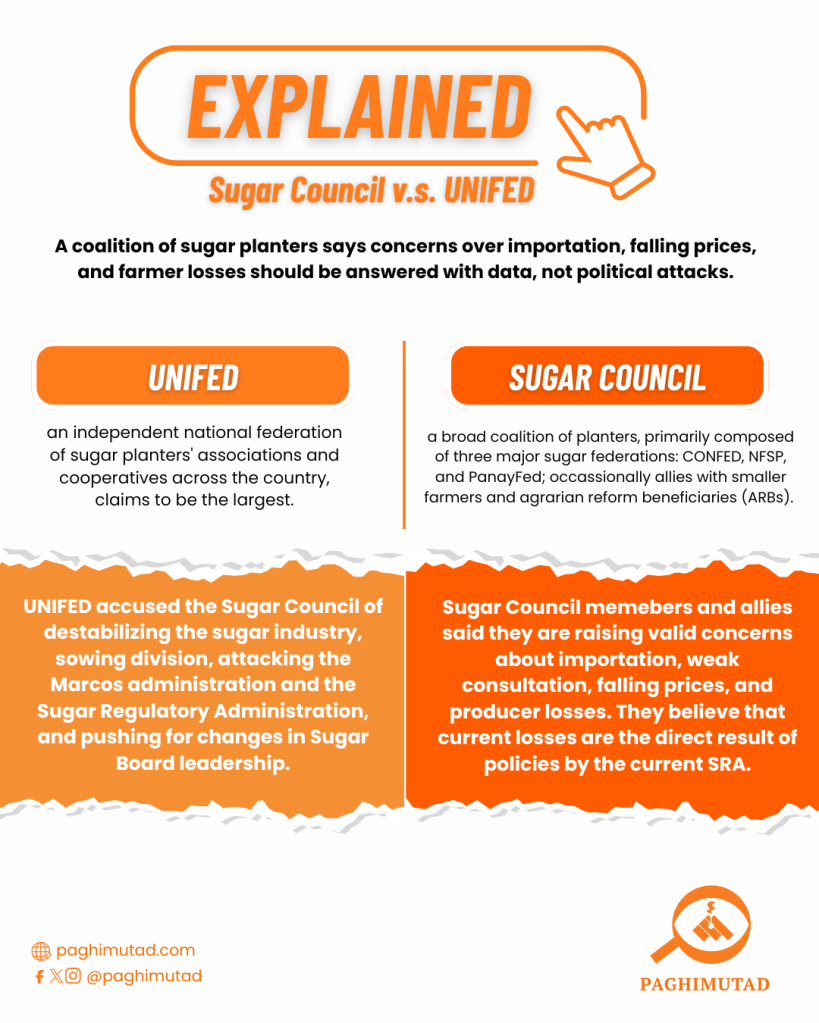
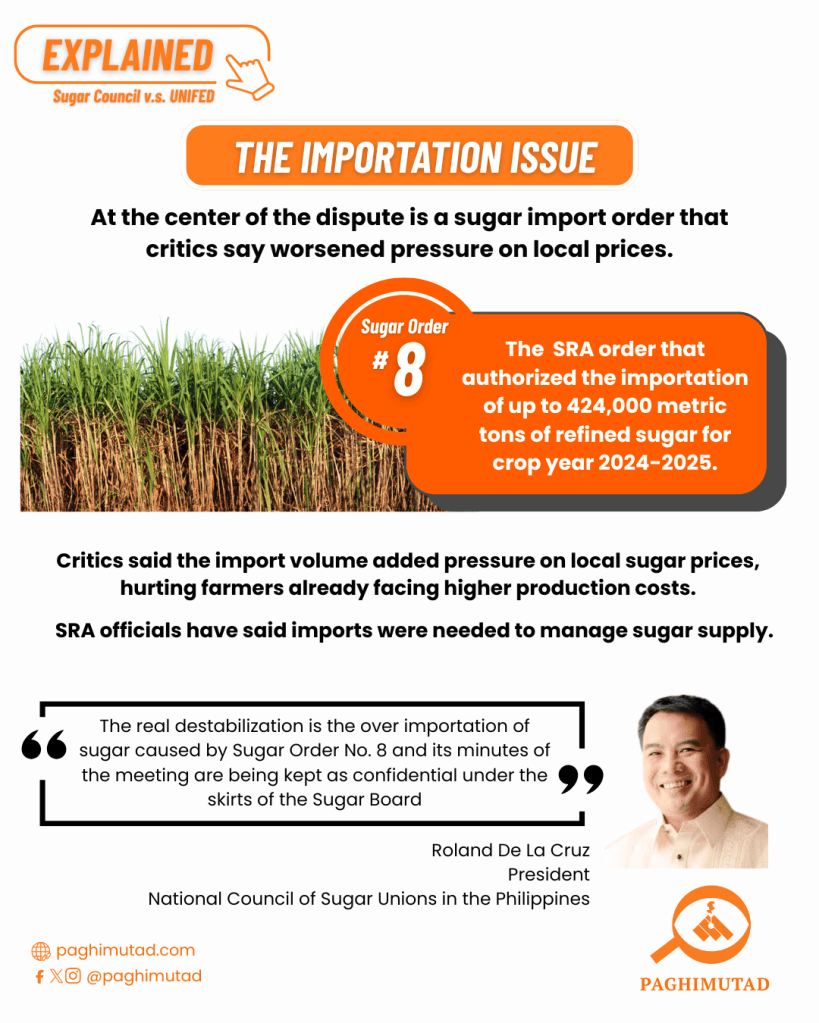
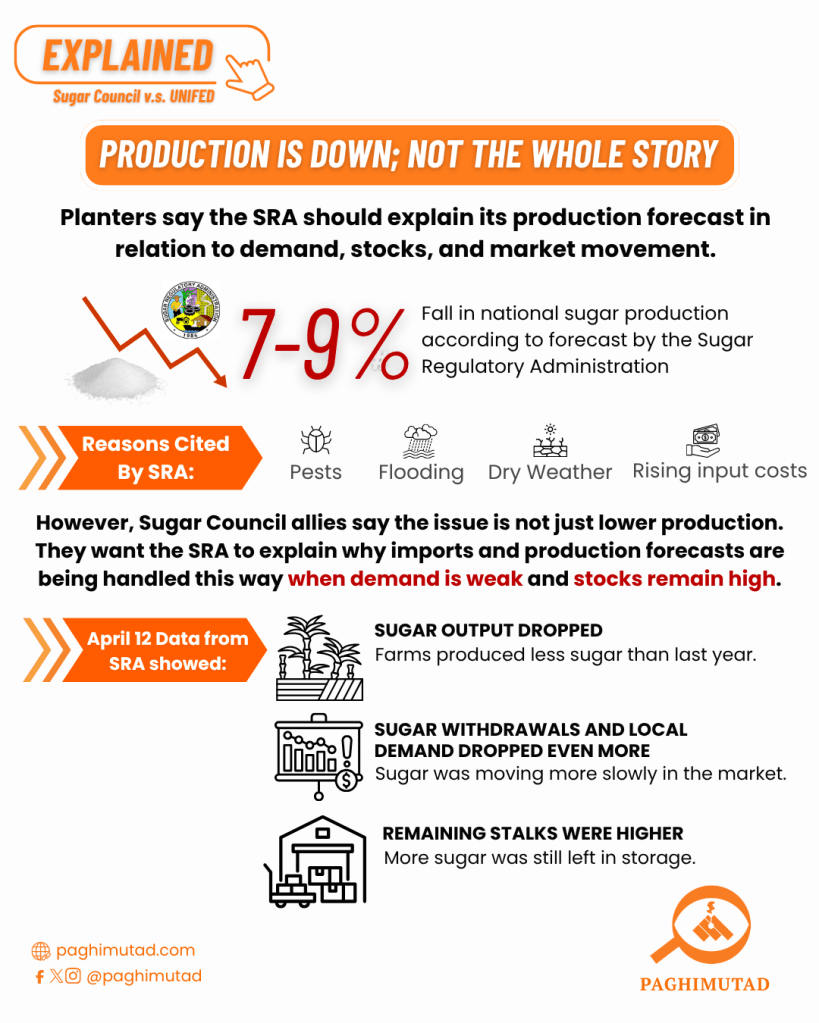
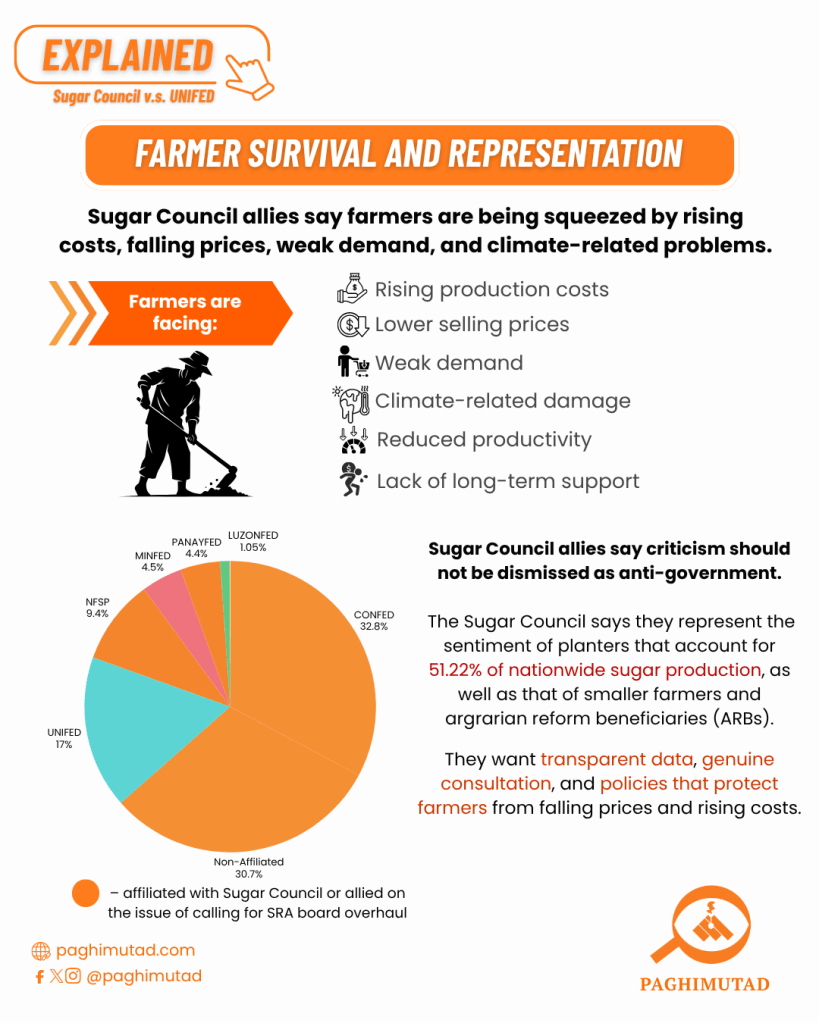
The Sugar Council, composed of three major confederations as well as allied ARBs and small planters, are also calling for accountability from the SRA and their immediate resignation. Meanwhile, allies of the current SRA board such as UNIFED have rejected such calls and labeled demands by both the Sugar Council and NACUSIP as “destabalizing the industry.”
Tapi-on said the NFSW supports restructuring but warned that simply replacing board members would not solve the crisis if the agency remains controlled by millers, traders and big planters.
“Our industry should be run by the Filipino people, not by the large capitalists in the sugar industry, because if it’s only up to the capitalists, they only chase after profits,” Tapi-on said.
He said reforms to SIDA may have “good intentions,” but added that subsidies must go directly to sugar workers and small planters. The NFSW is calling for a “people-oriented” sugar industry, genuine agrarian reform and nationalization of sugar.

