
by Ketch Infante
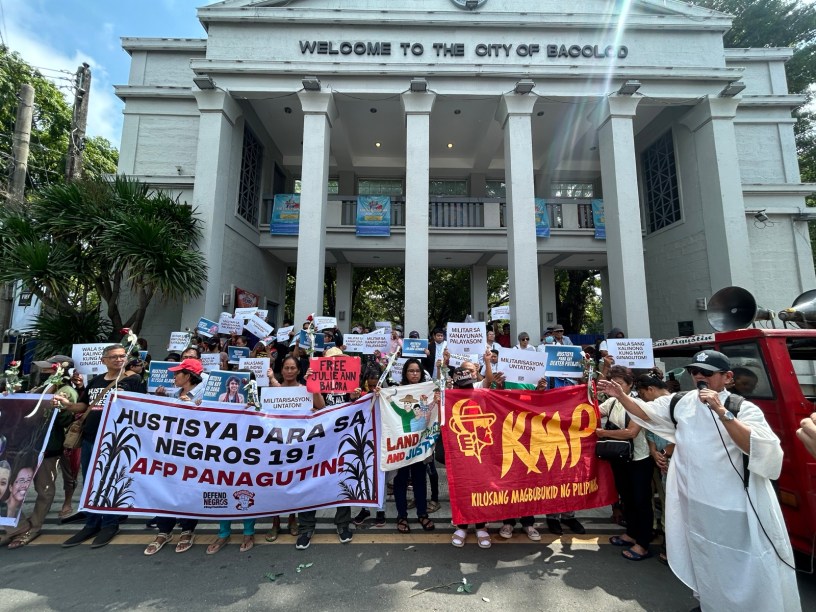
BACOLOD CITY, Negros Occidental — Human rights activists and community members gathered in the streets of Bacolod in a lightning protest on August 19, 2026, marking four months since the Toboso 19 Massacre and demanding justice and an end to militarization in the region.
Led by #DefendNegros and the Negros-based human rights alliance Manindigan, the protesters renewed their call for justice for the brutal massacre that claimed 19 lives in Toboso, Negros Occidental, on April 19, 2026. Among the 19 were civilians: University of the Philippines Diliman councilor Alyssa Alano; Negros-based community journalist RJ Ledesma; community researcher Errol Wendel; University of the Philippines student Maureen Keil Santuyo; American activists Lyle Prijoles and Kai Dana-Rene Sorem; Dexter Patajo, and Jolinda Gemina.
The protesters stressed the immediate pullout of military troops from communities in Negros, calling for an end to the continuing militarization in communities and for the protection of residents subjected to military presence and counterinsurgency operations.
Kilusang Magbubukid ng Pilipinas (KMP) Negros spokesperson Danilo Tabura expressed anger over the ongoing militarization of the region and vowed to continue the fight against injustice in his speech at the protest.
“Ang Negros ginbubuan sang todo sang counter-insurgency nga programa sang peste kag leche nga gubyerno para punawon ang pagpakig-away sang pumuluyo sang ila sandigan nga demanda. Apang padayon kita nga magatindog para sa kabuhi kag hustisya,” said Tabura.
Human rights groups across and outside the nation have condemned the bloody military operation as a massacre, accusing the 79th Infantry Battalion (IB) of violating International Humanitarian Law (IHL).
Human rights group Karapatan stated that the 79th IB indiscriminately killed civilians, violating the IHL principles of distinction and proportionality.
Four months later, the presence of armed troops in the region continues to heighten fear among residents. Human rights groups present at the protest emphasized the demand for genuine justice for the Toboso 19 and an end to the militarization of civilian communities.
“Habang nananatili ang korapsyon, habang nariyan ang pandarahas ng estado, patuloy na susulong ang maraming mamamayan sa landas ng pinakamataas na pakikibaka. Dakilain natin ang alaala ng mga nagbuwis ng buhay alang-alang sa ikabubuti ng nakararami,” said Cathy Estavillo of AMIHAN, highlighting the sacrifices of martyrs killed not only in Negros but across the nation.
Claro Alano, uncle of Alyssa Alano, expressed a call to support the continuing campaign demanding justice for the Toboso 19.
Four months of justice denied, while families, communities, peers, and rights groups continue to remember the Toboso 19 as lives wrongly taken—lives dedicated to serving and fighting for others, lives deserving of justice.
Negros remains the land of landless peasants, the home of harassed communities, and the maker of martyrs. As its soil continues to be watered by blood and toiled by gunpowder and military vehicles—from the Escalante Massacre of 1985 that claimed 20 lives to the Toboso 19—the region and its people will have nothing else to harvest but justice and peace.
The protest marks one of many more to come, efforts that will continue the fight for justice and accountability for the Toboso 19, and defending the rights of the communities of Negros.
 Paghimutad