
By Andrea Mae Ecoy
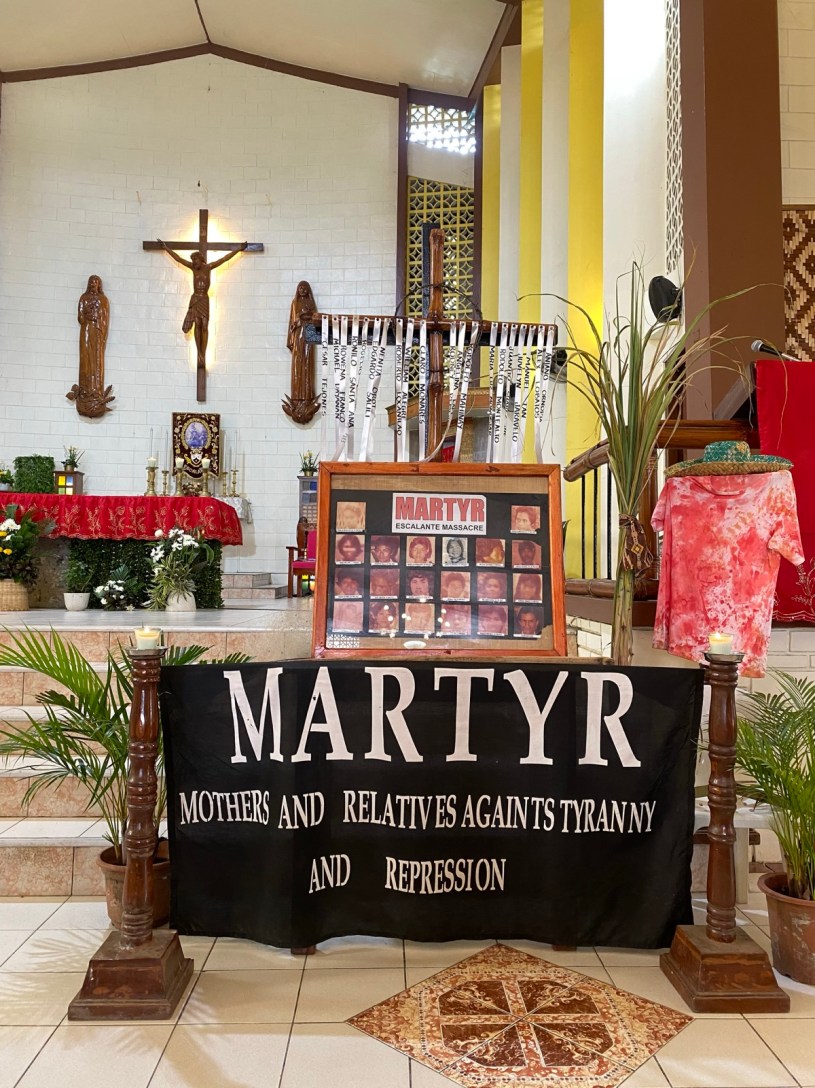
ESCALANTE CITY, NEGROS OCCIDENTAL — After seven years without an annual procession, survivors, families of the 20 martyrs, and various sectors returned to the streets of Escalante City on September 20, 2026 to mark the 41st anniversary of the Escalante Massacre.
The procession, absent from the commemoration since 2018, became part of this year’s gathering as survivors and organizers continued the tradition of remembering the civilians who were killed during a protest on September 20, 1985, under the Marcos Sr. dictatorship.
After seven years, the procession returns
The 2026 gathering also marked the return of the procession after it was absent from the annual commemoration since 2018. For survivors, families, and organizers, its return reflected the persistence of the community in keeping the memory of the 20 martyrs alive.
The return of the procession, however, should have come alongside another activity that organizers said they were unable to hold: the reenactment of the Escalante Massacre.
A member of Teatro Obrero said the reenactment could not proceed because of what the group described as intervention from the NTF-ELCAC and the military, as well as red-tagging experienced by members involved in the cultural movement.
“Kaso lang ngayon ngayon hindi nagawa kasi intervention man ng NTF-ELCAC, military. Ang nangyari kasi, red-tagging din ang nangyari sa kasamahan namin. Kapag nalaman nila na active ka sa movement, sa cultural movement, mayroon kang red-tagging, hinahabol kana.”
Despite these difficulties, the procession returned to the commemoration.
For survivors and families, the wait before it began brought the past and present into the same day: 41 years after civilians were massacred during a protest, they were once again gathered to remember them while military personnel were present.
A remembrance shaped by military presence
While the procession marked a return to a longstanding tradition, the presence of the 79th IB during the commemoration became another point of concern among participants.
The situation brought a historical contradiction into the gathering.
The Escalante Massacre happened during the Marcos Sr. dictatorship, when state forces violently dispersed protesters. Forty-one years later, survivors and families were again gathered in the same community to remember those who died, while military personnel were present at the commemoration.
For human rights and progressive groups, the military presence reflected concerns they have continued to raise about militarization in Negros and its effects on communities and organizations.
One survivor said repression did not simply disappear with the end of the Marcos Sr. administration.
“Patuloy na ginagamit ang mga instrumento ng batas militar upang dahasin ang bayang tumitindig para sa tunay na kalayaan at demokrasya.”
The Human Rights Advocates Negros likewise connected the 41st anniversary to what it described as continuing human rights violations and militarization in Negros.
“Gikan sa Escalante Massacre, natabo na ang Siaton Massacre sang 2018 nga may apat nga ginpatay, Sagay 9 sang amo man nga tuig, Negros 14 sang 2019, Fausto Massacre sang 2023, kag sini nga tuig ang Toboso 19. Asud-asud kag wala untat ang pagbutang sang gobyerno sa pumuluyo sa katalagman,”
HRAN cited these cases as examples of what it described as continuing violence and threats faced by communities on the island.
For the group, the struggles remembered in Escalante remain connected to present concerns over human rights and militarization.
Survivors carry the memory of the massacre
For the survivors, the commemoration was not only an act of remembering but also a return to experiences they had personally lived through during the massacre.
One survivor recalled the violence that followed the dispersal of protesters, remembering the water cannon and the injuries suffered by fellow demonstrators.
“Ang response sadto amo na to ang pagpamumba sa amon nga mga welgista. Sunod-sunod ang pagbomba sang bumbero. Na eksperyensiya ko pa to ang pagligid-ligid sa kalog nga nagapaligo sang tubig nga mabaho. Sa ulihi, indi na tubig ang akon ginapaligo, kundi dugo na sang akon upod. Wala kag tuo pilason kag ako man mismo.”
Another survivor remembered how protesters tried to protect themselves during the dispersal.
“Kabaho sang ila tubig—sa kanal to or sa diin to nila nakuha nga tubig. Naghapa kami tanan kag nagkapit-bisig tapos nawad-an na sang tubig naman. Sa ulihi, ang ila nga gingamit ang tear gas—ginhaboy nila sa mga raliyista. Pagkatapos sadto, nagpalupok na sila dayon sa mga raliyista.”
A third survivor recalled realizing that those behind them had already been killed.
“Pagkakita ko sang akon likod kag na tingala ako nga ka bug-at na. Kay gali, patay na sila.”
Decades later, these memories remain part of how survivors understand the significance of returning to the streets to commemorate the massacre.
From Escalante to the present
For Noli Rosales of Bagong Alyansang Makabayan-Negros, the significance of Escalante extends beyond the 20 martyrs. He said their struggle reflected the wider conditions experienced by peasants, workers, students, and other communities across Negros.
“Dako ang ila nga naging papel diri sa isla sang Negros para bag-uhon ang sitwasyon indi lang sa mga mangunguma, indi lang sa mga istudyante, indi lang sa mga mamumugon, kundi ang bilog nga sitwasyon sang isla sang Negros sa idalom sang represyon indi lang sa Marcos kundi sa naglabay nga tanan nga mga lider sa pungsod Pilipinas.”
That broader struggle, according to HRAN, remains visible in the conditions faced by communities today.
“Madugay na ang promisa sa mga manguguma sang Isla sang Negros nga repormang agraryo. Apang gikan sa Dekada ’80 pakadto subong nga tuig 2026, ang pipila na ka siglo nga pyudal nga pagkapyot sang mga agalong mayduta sa kaduta-an sining isla sang kalamay wala sa gihapon mabungkag,”
HRAN pointed to continuing landlessness and agrarian problems, as well as low wages and insecure livelihoods among peasants and workers.
For Rosales, remembering Escalante is also tied to how people pursue change in the present.
“Hambal nila gani ang pagbag-o kuno indi sa kay Marcos. Ang pagbag-o halin mismo sa aton kaugalingon—paano naton ina isulong para malab-ot naton ang matuod-tuod nga kinabukasan.”
Remembering through return
The 2026 commemoration marked more than the 41st year since the Escalante Massacre. It marked the return of a procession that had been absent from the annual commemoration for seven years.
For survivors, families, and organizers, its return showed that the memory of the 20 martyrs continue to be carried by the people of Escalante despite the difficulties surrounding remembrance and organizing.
They waited before the procession could proceed.
Then, they marched.
Forty-one years after the massacre, the streets of Escalante once again became a place of remembrance, bringing survivors, families, and communities together to recall the 20 martyrs and the circumstances that shaped their lives.
The return of the procession did not erase the years when it was absent, nor did it resolve the concerns raised by survivors and organizers over red-tagging, militarization, and restrictions on organizing.
Instead, it showed how remembrance persisted.
After seven years, the procession returned to Escalante, carrying with it the memory of the 20 martyrs and the continuing stories of those who survived them.

