
By: Andrea Mae Ecoy
BACOLOD CITY — Three years into the privatization of the Central Negros Electric Cooperative (CENECO), consumers continue to bear the burden of high electricity bills and recurring brownouts, while control over the cooperative’s remaining assets is being placed under a new structure.
For Bayan Negros, the situation shows what privatization under the Electric Power Industry Reform Act (EPIRA) has brought to consumers: electricity increasingly treated as a business for profit rather than a public service for the people.
The group earlier criticized the prolonged power outages in Bacolod, saying they expose the failures of privatization. It warned that while private corporations take control of distribution utilities (DUs), ordinary consumers are left to shoulder high electricity costs and unreliable service.
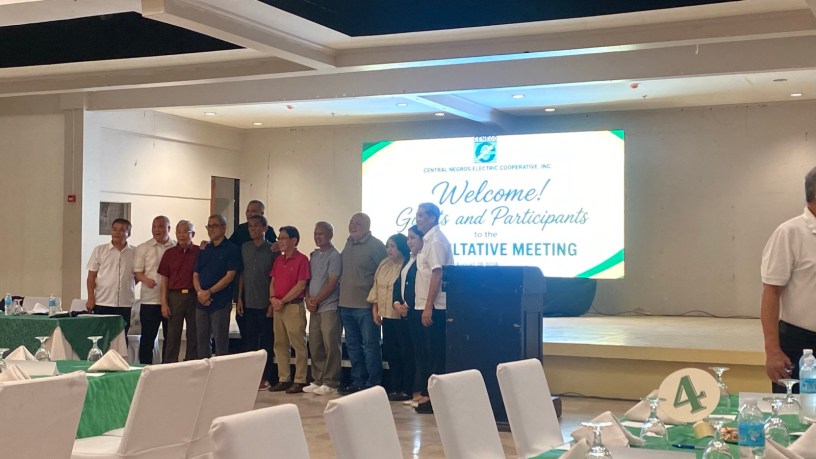
The same concern now faces CENECO’s around 220,000 member-consumers as proposed amendments to its Constitution and By-Laws were discussed during a consultation on August 28 at the Acacia Hotel in Bacolod City.
“They were so hell-bent on railroading the takeover of Central Negros Electric Cooperative (CENECO), going so far as bribing consumers into consenting to the joint venture agreement, and yet they could not foresee such problems ahead and make actionable steps that will not make consumers suffer,” said BAYAN Negros
Under its Joint Venture Agreement (JVA) with Negros Electric and Power Corporation (NEPC), CENECO transferred its distribution assets to the private company in exchange for 70% cash and 30% shares of stock. CENECO therefore retains a 30% equity stake in NEPC, which may generate dividends once the company becomes profitable.
“Hundreds of thousands of consumers must recognize that as long as basic human rights such as electricity and water are controlled by capitalists, we will continually be at a disadvantage. When we were stakeholders in our electric cooperative, we had the power to hold them accountable for their failures. Now, under private management, consumer interests are sidelined as these companies prioritize profit over addressing our needs,” BAYAN Negros warned that privatization weakens the ability of consumers to hold their utility accountable.
But for consumers, the question remains: after giving up control of their distribution assets through the JVA, what do they actually gain?
For ordinary households, electricity is not an investment. It is a daily necessity. Every increase in the power bill means less money for food, transportation, education, and other basic needs, especially for families dependent on daily wages.
Consumers have limited control over how the cooperative’s remaining assets and its 30% stake in NEPC obtained through the JVA will be managed. The proposed restructuring would turn CENECO into an asset management corporation, giving its Board greater responsibility over these assets while providing no clear guarantee that future financial gains from the JVA will directly benefit member-consumers.
This raises concern over further disenfranchisement. Member-consumers may retain the right to elect Board members, but their ownership risks being reduced to choosing who will manage assets that they themselves collectively own.
The concern is greater because some Board members are also local politicians, raising questions about whether CENECO’s remaining assets and financial interests could become vulnerable to political interests instead of being used for the benefit of consumers.
The proposed by-laws must therefore be scrutinized not only for how CENECO will be governed, but for who will benefit from the assets and financial returns retained from the JVA and who will have the power to decide their use.
Three years after privatization and the implementation of the JVA, the experience of CENECO’s member-consumers should be at the center of the discussion. If privatization was meant to improve electricity services, consumers deserve to know where those improvements are and why they continue to pay the price.
As CENECO moves toward restructuring, member-consumers demand transparency, meaningful participation, and accountability over the assets and financial interests that remain theirs. Electricity must serve the people who depend on it, not become another source of profit and political patronage.

